How Overseas Buyers Avoid Trading Company Pitfalls: A Complete Guide to Direct Sourcing from Nonwoven Fabric Factories


Explore how overseas nonwoven fabric buyers can identify and avoid trading company traps. Learn the core advantages and verification techniques of direct sourcing from factories for cost control, quality assurance, and technical customization.
Current Landscape: Why Overseas Buyers are Eager to Bypass Traditional Trade Intermediaries?
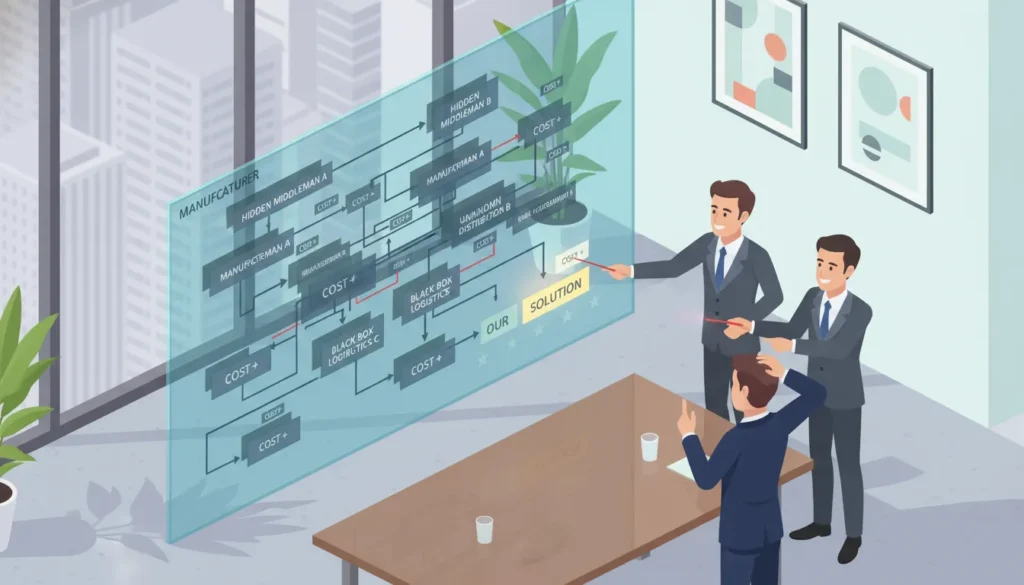
In today’s increasingly transparent global trade environment, many overseas nonwoven fabric buyers find that traditional trade intermediaries often lead to information delays and opaque costs. Trading companies typically generate profit through markups, which not only raises the unit price but can also cause a “disconnect” in product specification communication. Since intermediaries do not directly own production lines, they often fail to provide real-time technical support or production progress feedback when facing bulk orders or special customizations. This lack of transparency is a primary cause of extended procurement cycles and quality fluctuations. Therefore, identifying and bypassing these middle layers has become a top priority for supply chain optimization.
Core Competitive Advantages of Direct Sourcing from Nonwoven Fabric Source Factories
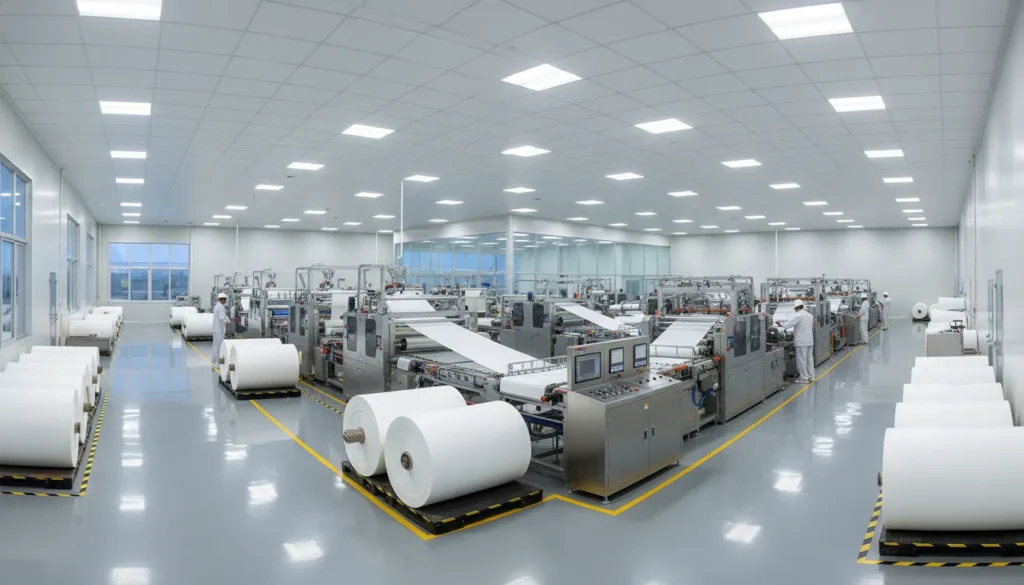
Establishing a direct connection with a source factory offers significant benefits in cost optimization and vertical quality control. Factories can provide ex-factory pricing, eliminating all intermediary markups and making buyers more competitive in the end market. As noted in mingtak nonwoven‘s industry trend reports, more global buyers are prioritizing vertical supply chain integration to ensure precise product specification implementation. Direct dialogue with a factory’s technical team means every detail—from fiber raw material selection to the physical performance indicators of the final rolls—is professionally addressed. Furthermore, source factories usually have more flexible production scheduling, allowing them to prioritize urgent orders for direct-supply customers and ensure delivery stability.
Pitfall Avoidance Guide: How to Effectively Verify a Factory’s True Identity?

To avoid trading companies posing as factories, buyers must master several core verification techniques. First, check the business scope on the business license; a genuine factory must include terms like “production” or “manufacturing.” Second, request a real-time video factory audit, focusing on whether the production lines show signs of continuous operation rather than just a showroom. Third, verify the identity of certificate holders; international certifications like ISO 9001 or OEKO-TEX must match the name of the contracting entity. Through this in-depth background check, buyers can filter for partners with true R&D and production capabilities, fundamentally reducing procurement risks and ensuring long-term supply chain security.
The Profound Significance of Establishing a Long-term Direct Supply System for the Supply Chain

Building a direct supply system is not just about immediate price advantages; it is about long-term technical co-creation and supply security. Source factories are often more willing than trading companies to invest R&D resources into developing new materials with customers—a synergy that is crucial in the competitive nonwoven market. Through direct sourcing, buyers can obtain more accurate market forecasts and inventory advice, effectively reducing financial pressure. When dealing with raw material fluctuations or industry policy changes, having first-hand factory feedback allows companies to gain a head start in decision-making. In short, returning to the essence of manufacturing and engaging in direct dialogue with factories is the necessary path for every professional nonwoven buyer toward supply chain excellence.
Recommended Resource
https://www.iso.org/standard/74034.html
The ISO 9001 Quality Management System is the core basis for verifying whether a nonwoven fabric manufacturer complies with international standards.